By deployment · Retrofitting
Keep your equipment. Upgrade what controls it.
A QB Control retrofit turns existing bioreactors, skids and lab setups into software-defined systems — on the vessels and towers you already own, from any vendor. Every control function you rely on is preserved; everything you couldn't change before becomes yours to change.
- Every control function preserved
- Vessels and towers stay
- One unit first

What a retrofit is
The same equipment, with a control system you can change
A retrofit replaces or modifies part of the electronics and electrical installation and hands control to QB Control. At minimum, everything the system does today keeps working; in practice, it can do more.
What stays: your vessels, towers, physical installation and process. What changes: who decides what the system does — after the retrofit, that is your team.
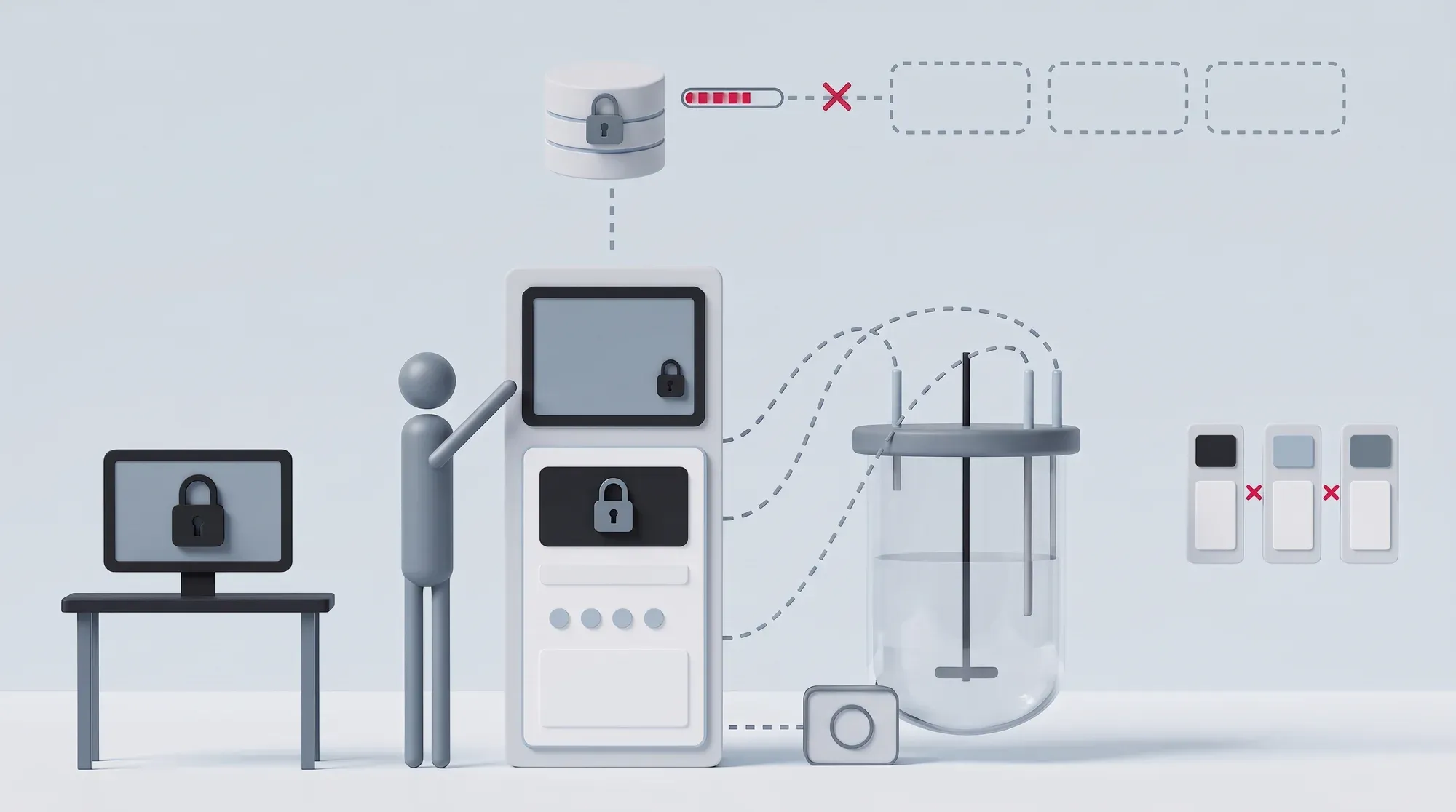
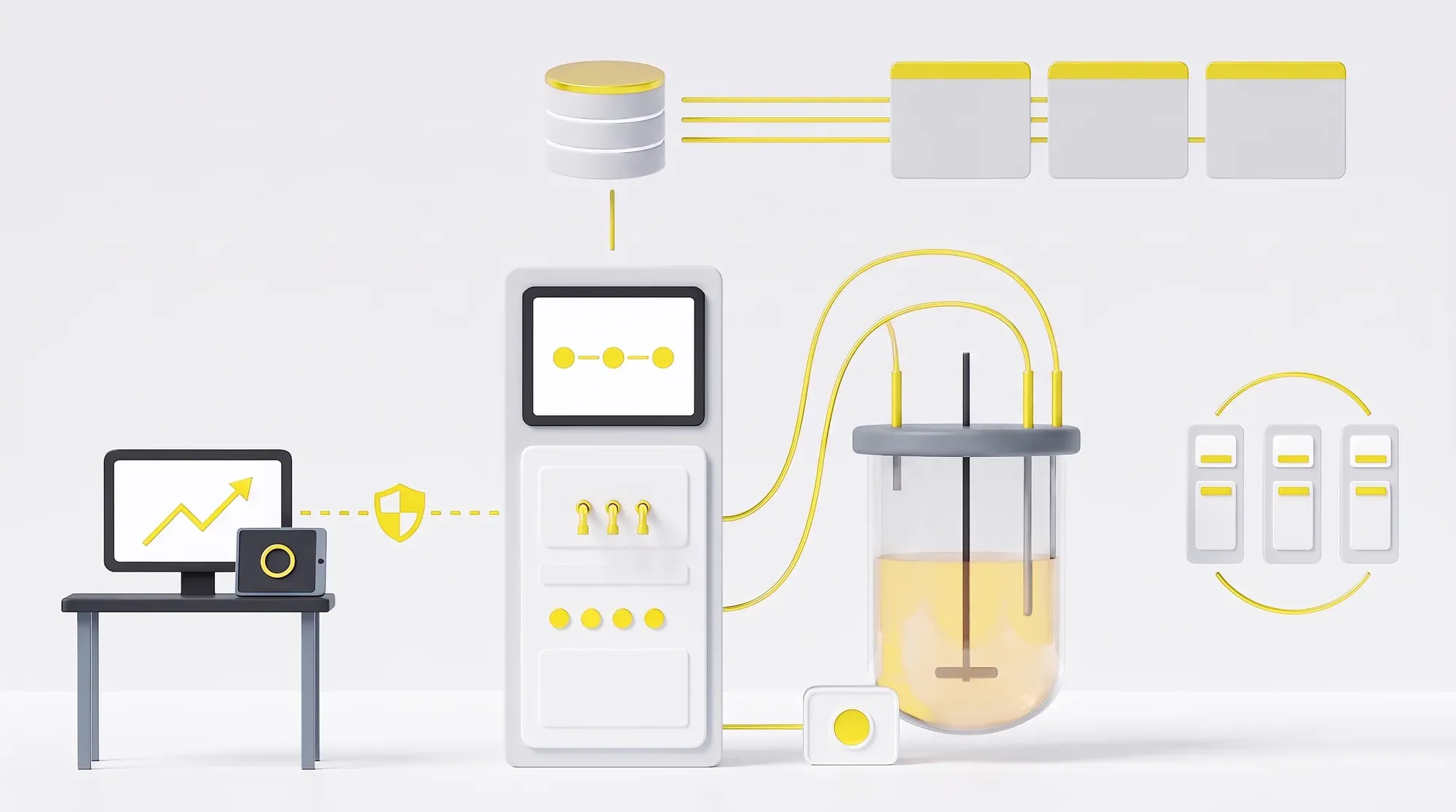
Drag across the picture (or focus it and use the arrow keys). Hover or tap a number for what it shows — the list below has the details. The vessel stays the same.
-
1 Process data
Before: Locked in the vendor's licence-capped database; exported by hand, often on a USB stick
After: In a historian you own, with no licence cap — connected to LIMS, MES and ERP over OPC-UA, MQTT and REST
-
2 Operation
Before: Someone has to stand at the panel on the tower or skid
After: From a browser or tablet on your network, by role — several units at once, with secure remote support
-
3 Control logic
Before: Locked in vendor PLC code; changing a strategy is an automation project
After: Software-defined in QB Control; strategies change in configuration
-
4 New sensor or pump
Before: Someone edits the PLC program
After: Added plug-and-play or through a connector, then defined in software
-
5 Recipes
Before: Fixed by the vendor or integrator
After: Written, versioned and run by your team — in sequence or in parallel
-
6 Fleet
Before: Each unit is its own island
After: One verified configuration exported to the next unit or scale
What it looks like on a real tower
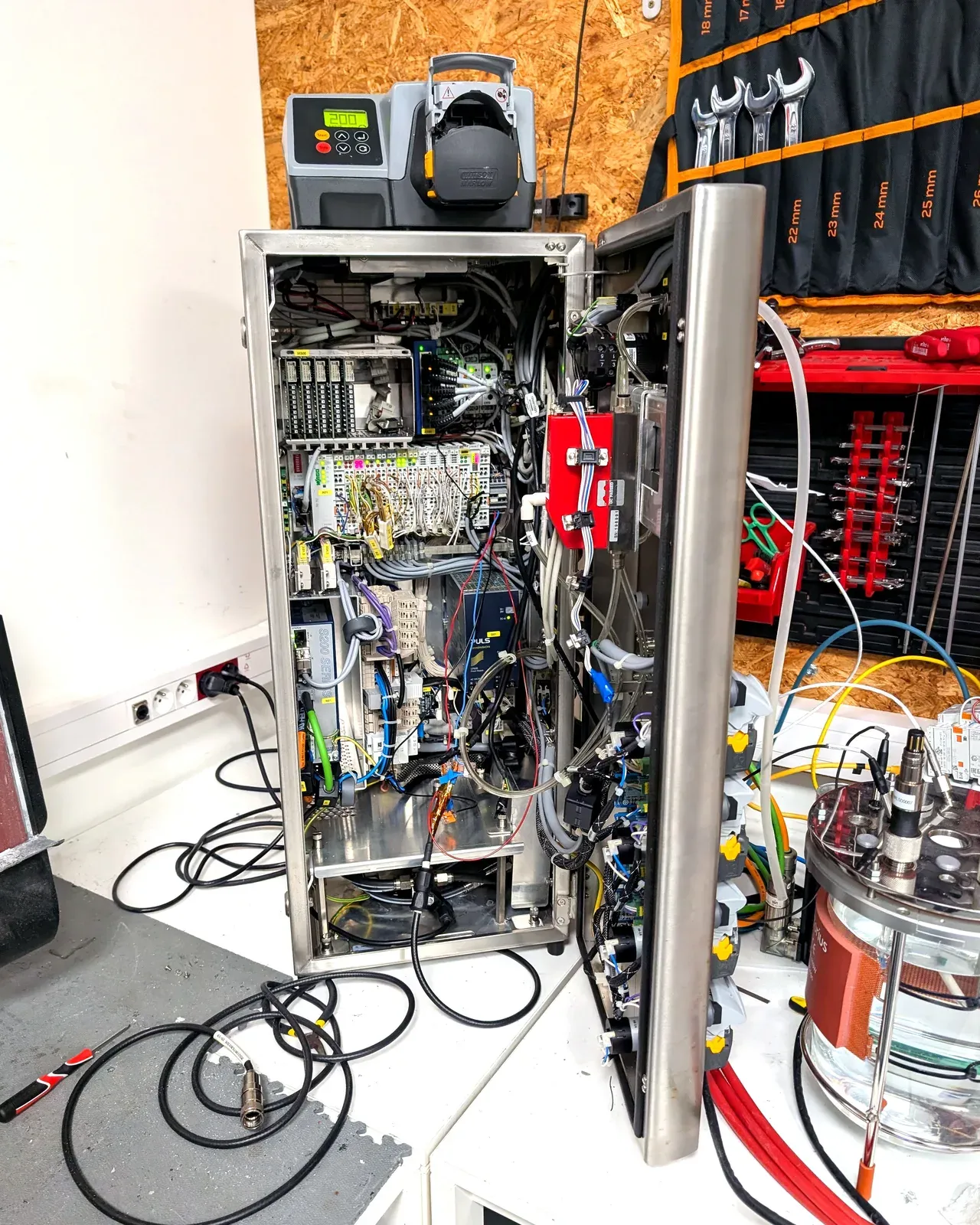
A retrofitted bioreactor control tower: the original panel, now running QB Control.
-

Start screen with every module -

Devices and connection status -

Live P&ID with setpoints
Full control takeover
We replace or modify the controller and the electrical connectivity it needs, and QB Control takes over control of the system.
Alongside your existing PLC
Where the PLC allows, QB Control connects read-only and runs next to it for monitoring, data and reporting.
Adding new hardware to existing vessels instead? See the hybrid deployment options.
What can be retrofitted
Bioreactors, skids and lab setups from any vendor
QB Control is vendor-agnostic, so a retrofit is not limited to one manufacturer. What matters is that the mechanics are sound and the control layer is the limit.
- Reference project
Bioreactor control towers
Benchtop and stainless-steel bioreactors, including towers with CIP/SIP and media connections. Example: Sartorius® Biostat® B-DCU and D-DCU.
- Reference project
Mixed legacy lab setups
Pumps, balances, sensors and controllers from different vendors and eras, brought under one control platform over Modbus TCP and OPC-UA.
- Typical
Glass and steel vessels
Existing vessels (e.g. Applikon or Getinge) run with new QB Control and QB Modules on top.
Learn more - Typical
CIP and media systems
Phases and steps moved into recipes your team manages, without PLC reprogramming by an integrator or vendor.
- Assessed per unit
Other vendors' unit operations
Bioreactors, filtration and media-prep skids from other vendors — for example Thermo Fisher or Eppendorf equipment — assessed unit by unit at the technical survey.
- Typical
Systems with no PLC access
Equipment whose vendor is gone or whose PLC program you can't open: QB Control can take over as new control software after new devices or sensors are added.
Reference project — delivered for a customer. Typical — a standard QB deployment pattern. Assessed per unit — possible, confirmed at the survey.
Benefits
What a retrofit gives your team
- 01
Nothing critical is lost
Every control function you rely on today is preserved — that is the acceptance criterion, not an aspiration.
- 02
Strategies change in configuration
Move dosing to gravimetric, run pH on one pump or two, restructure a PID loop — without a PLC project.
- 03
Recipes your team owns
Define, version and run your own recipes; start single services or groups straight from the P&ID.
- 04
Operate from the browser
Full control or monitor-only by role, on your network. Watch several processes on several units from another room.
- 05
Your data, uncapped
No licence limit on the process database — only the historian's disk space — and no limit on signals per chart.
- 06
One configuration, many units
Process definitions and recipes export and import between units and across scales, e.g. 1 L to 70 L.
- 07
Reuse equipment you own
Use an extra pump or sensor on another unit without PLC changes — only the process definition changes.
- 08
New capability by licence
Connectors (Modbus / OPC-UA devices) and Signals (soft sensors) unlock from a licence file, not an integration project.
What we change, and what we keep
Each item is replaced, modified, or kept and adapted — decided per unit at the survey. A sound temperature sensor can stay while its transmitter is modernised; existing panels are reconnected. We change what limits you and keep what works.
Hardware
- Controller or QB Edge / industrial PC
- Digital probes and the cabling they need
- Temperature, foam and level sensor modules
- Existing panels reconnected
- Additional electrical protection
Infrastructure
- Addressing across the fleet
- Browser access over your LAN
- Secure VPN for remote support, after your IT approves it
Software — QB Control
- Existing control loops and time profiles, preserved
- Device and sensor names matching your P&ID
- Alarms, calibration with history, audit trail
- Recipes and per-process safe states
Challenges
What makes a retrofit hard, and how we handle it
A retrofit is an engineering project on equipment that is already in use. These are the challenges to plan for, stated plainly.
-
It is not easily reversed
A retrofit changes the electrical installation and the instrumentation. Going back to the original state is possible, but it costs money.
How we handle it: We convert one unit first, you judge it on a working system, and we quote the rollback price up front.
-
Behaviour will differ in places
Loops, operating logic and PID algorithms are implemented differently from the original vendor's. Some loops need re-tuning.
How we handle it: Loop by loop, the URS records whether we reproduce the old result or the old algorithm — before implementation.
-
Freedom brings responsibility
Recipes, valve sequences and safe states become yours to change, so your team has to know the process and the installation.
How we handle it: We define initial and safe states with you before commissioning and test them by inducing the conditions.
-
Operators need training
The platform is different from a panel-based PLC system, even if it is easier to use.
How we handle it: Remote training, a user guide and a training programme on portal.qb.systems — so new operators can onboard later without us.
-
Legacy units hide surprises
Undocumented cabling, mixed probe types, ageing cabinets and PLC programs nobody can open.
How we handle it: An on-site technical survey comes first, and every component gets its own decision: replace, modify, or keep and adapt.
-
Your lab has to keep working
Experiments don't stop for an upgrade, and IT has to approve network and remote-access changes.
How we handle it: We plan around your experiment calendar, can ship a control tower to us and back, and convert a fleet in stages.
-
Qualification documents must stay true
In regulated work, the retrofitted system has to match your P&ID, component list and qualification records.
How we handle it: Device naming follows your P&ID and component list, and as-built documentation is a named deliverable.
-
Savings depend on your fleet
Cost and time benefits vary with the number of units, their condition and how much stays in place.
How we handle it: We estimate them per unit at the survey instead of promising a figure up front.
How it runs
From survey to handover in four phases
- 1
Survey and requirements
- On-site technical survey: probes, cabling, cabinets, PLC, every control loop, P&ID, network
- User Requirement Specification, including the loop-by-loop behaviour decision
- 2
Proposal and plan
- Scope, per-unit decisions, rollout sequence and rollback price
- Rollout plan built around your experiment calendar
- 3
Build and commission
- Hardware retrofit at your site, or at ours with the tower shipped both ways
- Network, panels and secure remote access
- Commissioning: services, alarms, calibration, P&ID, safe states, cold-start tests
- 4
Accept and hand over
- Site acceptance test, function by function, with each result recorded
- Findings closed in writing; training, user guide and portal access
- Next unit, reusing the verified configuration
Your lab keeps running
A control tower can be shipped to us, modified and loaded with software, then shipped back for connection and testing. Converted in stages, the units still waiting keep running your processes on their original software. And we always convert one unit first, so you decide on a working system before the rest follow.
Examples
Retrofits we have delivered, and the next ones

Sartorius Biostat® B-DCU and D-DCU towers
One 70 L stainless-steel D-DCU with CIP/SIP and four glass B-DCU units: QB Control took over full control, every vessel stayed, and the team moved to browser operation and its own recipes.
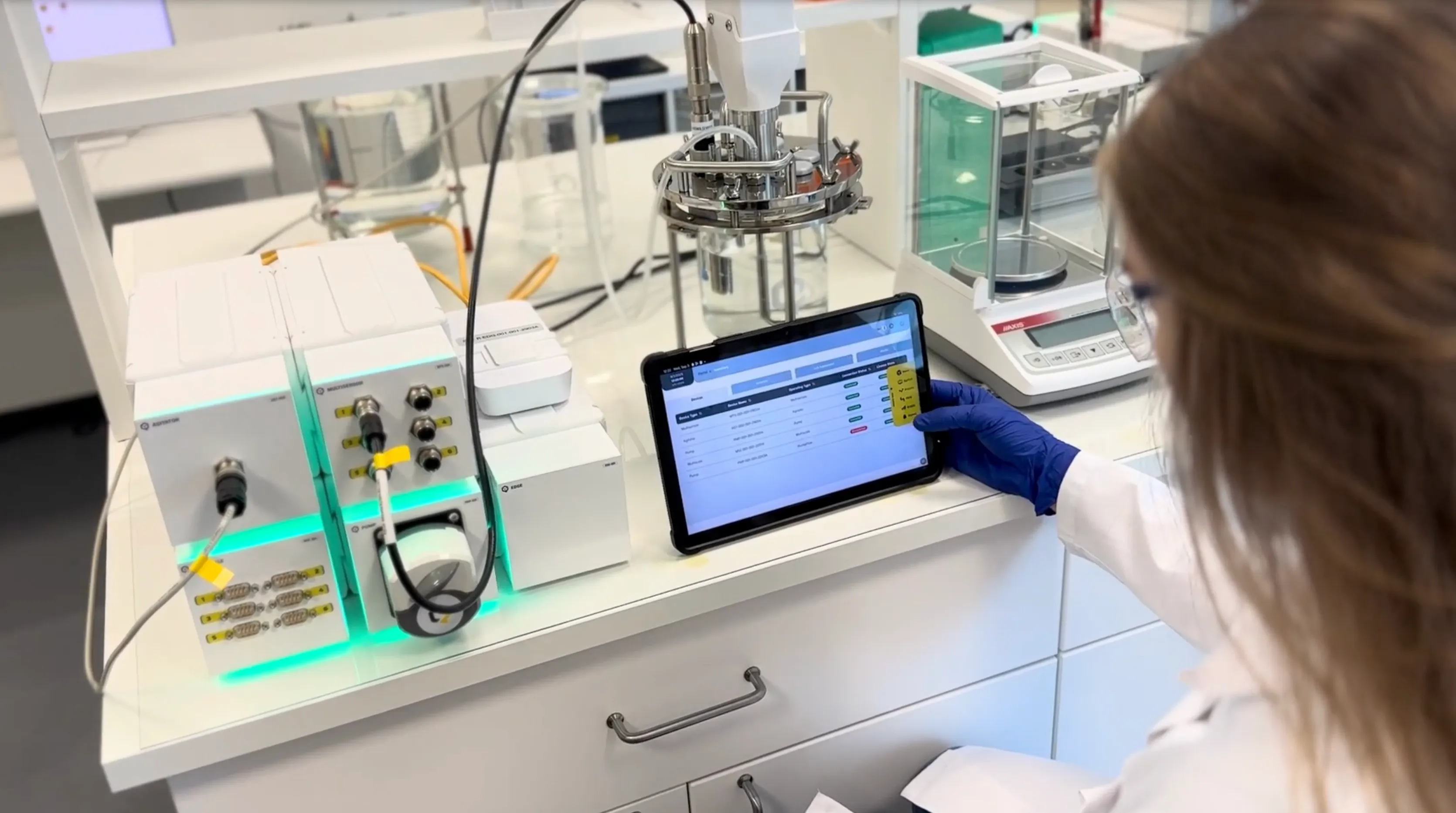
A legacy lab system, retrofitted instead of replaced
Legacy and modern devices connected under one platform over Modbus TCP and OPC-UA, with audit trail and LIMS integration.

Retrofit a legacy bioreactor to OPC-UA and MQTT
Step by step: put an existing bioreactor's probes on an open data layer with QB Multisensor, QB Edge and QB Control.
Your equipment could be the next retrofit
We're looking for teams that want to retrofit equipment from other vendors — Thermo Fisher, Eppendorf, Applikon, Getinge and beyond — including bioreactors, filtration and media-prep skids. Tell us what you run: we'll assess it unit by unit, and you work directly with the engineers who build QB Control.
- Thermo Fisher
- Eppendorf
- Applikon
- Getinge
- Other vendors
Retrofit questions, answered
Which equipment can be retrofitted?
Bioreactor control towers, skids and mixed lab setups whose vessels and mechanics are sound. We have retrofitted Sartorius Biostat B-DCU and D-DCU towers and mixed-vendor legacy setups; equipment from other vendors, such as Thermo Fisher or Eppendorf, is assessed unit by unit at the technical survey.
Will it behave exactly like my current system?
Not automatically. You decide, loop by loop, how close to the old behaviour each control loop should be. Some legacy loops use two-position control with hysteresis; QB Control can run a continuous PID or reproduce the legacy behaviour. We settle this loop by loop in the URS before implementation.
Can a retrofit be reversed?
Yes, fully, but it costs money because the electrical installation and instrumentation change. We quote the rollback price in the proposal and convert one unit first so you can decide on evidence.
Do I need the original vendor or access to the PLC program?
No. QB Control can take over as new control software even when the vendor is no longer involved or the existing PLC program is not accessible.
Can I use it in a regulated environment?
Yes. QB Control is conformant with the 21 CFR Part 11 requirements it implements (audit trail, PDF reports), with role-based access, versioning and ISA-18.2 alarm management, and device naming follows your P&ID and component list. Electronic signatures are on our roadmap and coming soon; until then, they're handled through your LIMS or quality management system. No claim of compliance or validation is made — that is a property of your validated process.
How long does it take and what does it cost?
Both depend on your units and your experiment calendar, so the technical survey sets them — in particular the per-unit decision to replace, modify, or keep and adapt each component. We do not quote a fleet from one unit's inspection.
Is it for you
Check if a retrofit fits your equipment
Tick what applies. Three or more usually means a retrofit is worth a survey.
Book a technical surveyStart with a technical survey
Tell us the equipment you run — vendor, model, scale and number of units — and what you want it to do. The survey shows, per unit, what a retrofit involves before anything is committed.
Contact us
Thank you! Your message has been sent — we’ll be in touch shortly.
Sorry, something went wrong sending your message. Please email us directly at [email protected].
Sartorius® and Biostat® are trademarks of Sartorius AG. Thermo Fisher, Eppendorf, Applikon and Getinge are trademarks of their respective owners. QB Systems is not affiliated with these companies.